You step out of the front door and the cold immediately catches in your throat. The street is utterly silent, save for the crunch of your boots on the pavement. The sky is that bruised, pre-dawn purple so typical of a British January, and sitting on the driveway is your car, encased entirely in a stubborn, opaque layer of white frost.
It is a familiar, often dreaded winter ritual. You fetch the brittle plastic scraper from the glovebox, your fingers stiffening inside your gloves, and prepare for several minutes of frantic, futile hacking. You brace for the chill, resigning yourself to the terrible noise of plastic scraping violently against glass, hoping quietly that you do not scratch the pane or snap the tool in half.
But what if the secret to a perfectly clear windscreen requires no physical exertion at all? What if the most effective tool is not sold in a pressurised aerosol can at the local petrol station, but flows freely and dependably from your kitchen sink? The reality of clearing morning ice is far gentler than the violent scraping we have been taught to endure.
The Rivalry: Aerosols, Scrapers, and the Liquid Pivot
We are heavily conditioned to trust the neon blue liquids lined up on forecourt shelves. These chemical de-icers promise instant results, a quick spray to banish the frost, yet they harbour a deeply frustrating, hidden flaw. They leave a greasy smear, catching the blinding glare of the low winter sun and obscuring your vision the exact moment you turn a corner onto a busy main road.
Additionally, relying on aerosol chemicals means relying on a depleting, expensive resource. You invariably run out on the single coldest morning of the year, left shaking an empty tin while the clock ticks closer to your morning meeting. The alternative is profoundly simple, yet often misunderstood: ordinary tap water, generously poured.
Consider Arthur Pendleton, a 58-year-old rural postman traversing the frozen, winding lanes of the Yorkshire Dales long before the council gritters arrive. Arthur abandoned commercial de-icers decades ago after noticing how quickly they stripped the protective wax from his paintwork. He relies entirely on thermal mass, explaining over a steaming mug of strong tea that a large volume of cool water holds enough stored energy to instantly melt superficial frost without shocking or stressing the fragile glass.
Assessing the Morning Rivals: Why the Old Ways Fail
To truly appreciate why tap water triumphs so decisively, we must look critically at the alternatives we have blindly accepted. Every traditional method carries a significant drawback that we simply tolerate out of habit.
For the Scraper Traditionalist: You believe entirely in elbow grease and physical effort. But the hidden flaw of the heavy-duty plastic scraper is the microscopic grit inevitably trapped within the ice. You drag abrasive winter dirt repeatedly across your windscreen, leaving fine, permanent scratches that catch the light of oncoming headlamps and gradually degrade your visibility over the years.
For the Chemical Devotee: You rely on pungent, alcohol-based sprays to do the heavy lifting. The fatal flaw here is rapid evaporation. The alcohol melts the ice initially, but then evaporates instantly in the freezing air, often causing the remaining water content to refreeze as a thin, stubborn film before your car heater has properly warmed the cabin.
For the Engine Idler: You turn the ignition, crank the blower fan to maximum, and wait inside the warm house. This wastes expensive premium petrol and adds immense, unnecessary wear to a cold engine, not to mention the very real risk of opportunistic theft while your vehicle sits running and unattended on the driveway.
- Drop Tyre Pressure To Stop Sliding On Winter Ice
- Fix Cloudy Headlights With Baking Soda In Two Minutes
- Stop Car Battery Drain With One Simple Cable Trick
- Clean Wiper Blades With White Vinegar For Clear Glass
- The New DVSA MOT Rule Catching Drivers Off Guard
- Why Leapmotor Is Crushing Local UK Car Prices Today
- The Motorway Secret Reviving Blocked DPF Filters Instantly
- The Controversial Design Choice Ruining The New BMW 3 Series Grille
- The Hidden Flaw Driving Volkswagen Golf Owners To The Seat Leon
- The Dealership Markups Artificially Inflating Range Rover Evoque Prices
The Mindful Application: The Two-Litre Technique
The execution of this trick requires a slight, mindful shift in your morning routine. Instead of reaching for a plastic tool as a weapon, you approach the task like watering a delicate plant. The ice is not an invader to be battled; it is merely a phase to be transitioned by gently shifting the temperature.
You fill a clean container, and the rules are strict. The water must be cool, drawn straight from the cold tap. You may add the tiniest dash of tepid water just to take the bitter, freezing chill off, but it should never feel warm to your skin. Throwing boiling or hot water onto a frozen windscreen will cause thermal shock, cracking the glass instantly and leaving you with a massive repair bill.
- Fill a two-litre plastic milk bottle or a small watering can with cool tap water from your kitchen.
- Step outside, get into the vehicle, turn on the engine, and immediately activate your windscreen wipers.
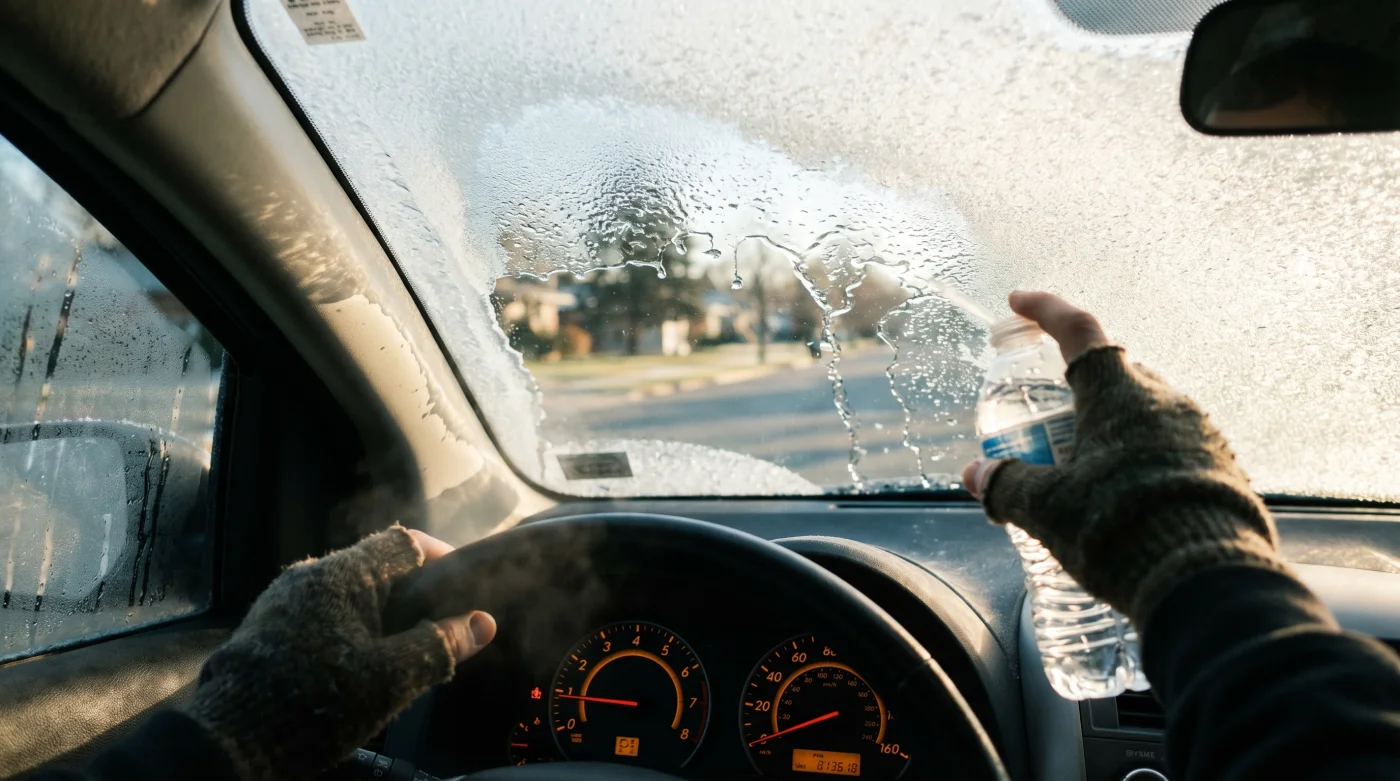
- Pour the water steadily and generously across the very top edge of the glass, allowing gravity to carry it downwards.
- Watch as the sheer thermal mass of the water melts the ice instantly, while the wipers sweep the excess away before it can settle.
To make this a seamless part of your morning, prepare the container the night before and leave it by the sink. By morning, the water will be exactly at room temperature, which is the perfect baseline for safely melting thick frost without causing structural stress to the vehicle.
Your tactical toolkit for this method relies entirely on volume over heat. Pour slowly and continuously to ensure the entire surface area is covered, preventing any isolated patches from refreezing in the morning breeze. The ambient temperature of the tap water is vastly warmer than the sub-zero frost, providing a gentle, devastatingly effective thaw.
Reclaiming the Cold Commute
The true, lasting benefit of this method extends far beyond the physical act of clearing ice from a pane of glass. It fundamentally changes your entire psychological relationship with dark, freezing winter mornings.
When you no longer dread the physical scrape, the morning becomes yours again. You step outside, perform a quiet, fluid action, and drive away almost instantly. It transforms a moment of shivering, rushed frustration into an exercise of quiet, satisfying efficiency, saving you time and preserving your vehicle.
You are no longer fighting the harsh elements with brittle pieces of plastic and stinging, expensive chemicals. You are working with them, using simple, grounding physics to ensure your daily commute begins with calm clarity rather than frantic panic.
True efficiency in cold weather driving is not found in buying more expensive products; it is found in understanding the basic nature of materials and using them gently.
| Key Point | Detail | Added Value for the Reader |
|---|---|---|
| Thermal Mass | Cool tap water holds enough energy to melt superficial ice without causing thermal shock. | Saves money on de-icers and protects glass from cracking under sudden heat. |
| Wiper Integration | Using wipers simultaneously sweeps away the melted water before the air freezes it again. | Allows you to clear the view and set off immediately without waiting for the heater. |
| Chemical Avoidance | Skipping aerosols prevents the greasy residue that alcohol and glycol leave behind. | Eliminates dangerous glare from low winter sun and oncoming headlights. |
Winter Windscreen Clarity: Frequently Asked Questions
Will cool tap water really crack my windscreen?
No. Thermal shock occurs with rapid, extreme temperature changes. Cool tap water is warm enough to melt sub-zero frost, but gentle enough to keep the glass entirely safe.
Why does my de-icer spray sometimes freeze again?
Commercial sprays rely heavily on alcohol, which evaporates incredibly fast. As it vanishes, it dramatically lowers the temperature of any remaining moisture, causing it to freeze back onto the glass almost instantly.
Can I use this trick on the side windows and mirrors?
Absolutely. Just pour the cool water gently over the side glass and use a soft squeegee or even a gloved hand to wipe away the excess water so it does not leave streaks.
What if the ice is incredibly thick, like after freezing rain?
For exceptionally thick ice, you may need a slightly larger volume of water. Use a watering can, pour slowly, and allow the thermal mass a few extra seconds to break the heavy bond before engaging the wipers.
Does this damage the rubber on my wiper blades?
It actually protects them. Wiping over partially melted slush is far kinder to your rubber blades than dragging them across jagged, frozen crystals, prolonging their lifespan considerably.