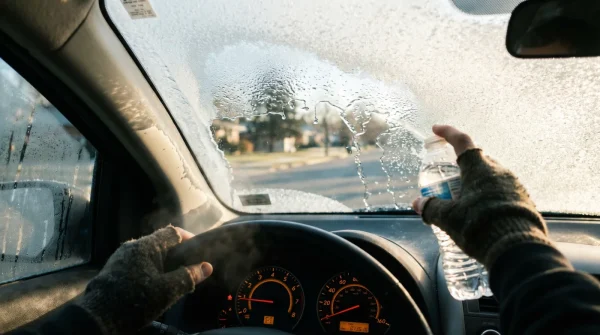
The morning starts with that familiar, brittle crunch of frost under your boots. You scrape the windscreen, hands already numb, watching your breath form plumes in the cold damp air of a January dawn. Climbing inside, the steering wheel feels like a ring of solid ice, and as you ease onto the local B-road, the world is deceivingly quiet.
A sudden lack of resistance tells you everything you need to know. The steering goes frighteningly light. The car drifts an inch to the nearside, totally unbothered by your frantic steering inputs. This is the helplessness of black ice, a moment where the physical gap between driver and machine feels vast and terrifying.
Most of us are taught to pump the brakes, gently steer into the skid, and hope for the best. We meticulously check our tread depth and ensure our dashboard sensors are happy, assuming the factory-recommended 34 PSI is an absolute law of motoring. Yet, up in harsher climates, the professional reality looks quite different. When the mercury drops and the tarmac turns to glass, the smartest drivers don’t add tension to the car; they literally let the air out of the situation.
The Physics of the Flattened Footprint
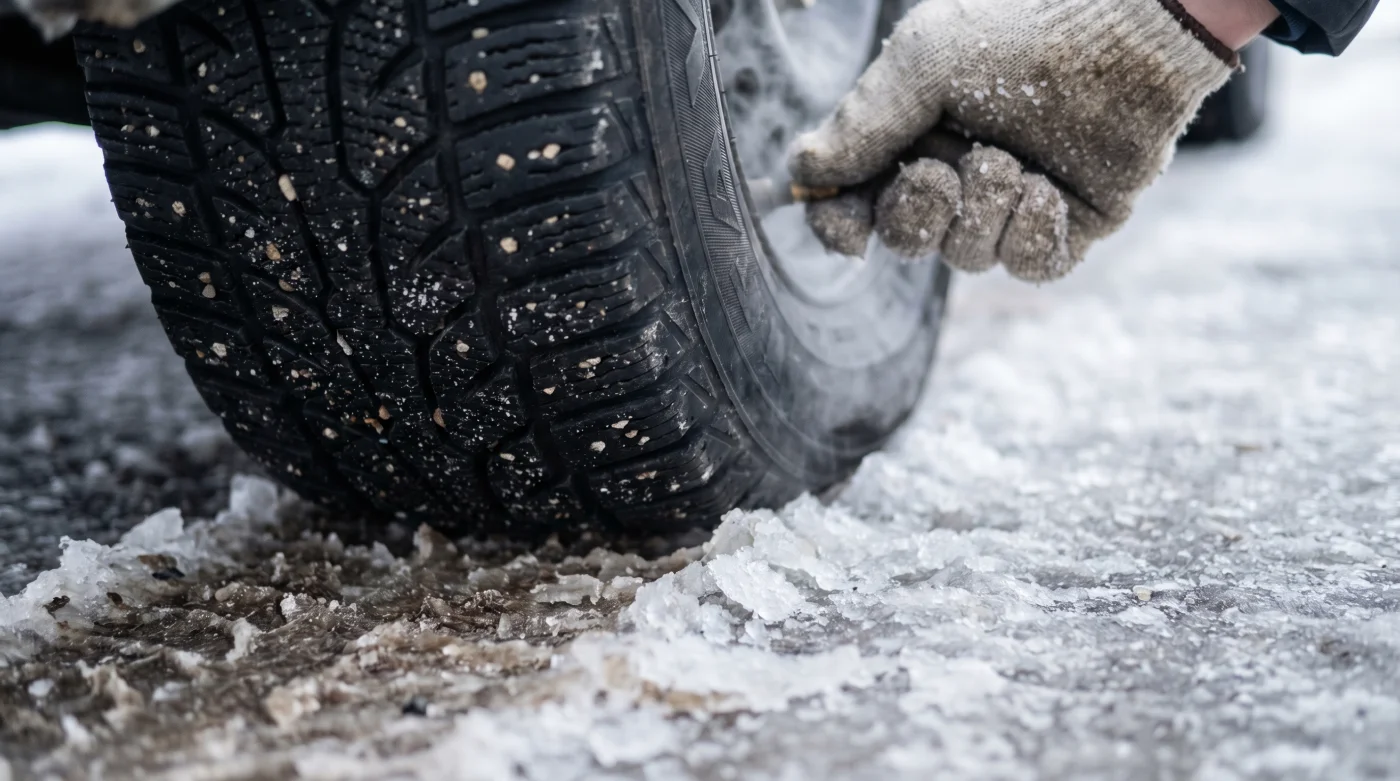
You have probably spent years diligently topping up your tyres at the local petrol station, aiming for that perfect, rigid pressure printed on the sticker inside your door jamb. It makes perfect sense for motorway fuel economy and sharp summer cornering. But on a frozen morning, a fully inflated tyre acts like a racing skate on an ice rink. It is hard, unforgiving, and makes a dangerously narrow point of contact.
Expanding your contact patch is the secret to finding grip where none seems to exist. By intentionally letting a little air out of your tyres, you allow the rubber to sag slightly, creating a wider, flatter belly against the frozen road. Think of it like swapping hard leather brogues for thick woollen socks on a polished wooden floor. You are trading sharp, rigid efficiency for a larger, highly pliant surface area.
This perspective shift changes how you view winter driving. Instead of treating your tyre as a rigid hoop of unbreakable rubber, you begin to see it as a breathing lung. Lowering the pressure softens the stiff sidewalls, allowing the tread blocks to flex, open up, and bite into the microscopic imperfections hiding within the ice and compacted snow.
Consider Arthur Pendelton, a 64-year-old independent mechanic based out of a draughty, corrugated workshop in the Cairngorms. For thirty years, Arthur has been retrieving stranded tourists who gently slid their pristine saloon cars into snowy ditches. He always notices the exact same thing: their tyres are pumped up to maximum capacity. Before towing them out, he takes a simple brass gauge, kneels in the slush, and releases a few pounds of pressure from the driving wheels. “You can’t fight the ice,” he tells them, wiping freezing grit from his overalls. “You have to let the rubber sink into it.” It is a quiet, mechanical truth that rural drivers have relied on for generations.
Adjusting for Your Drivetrain
The way you approach this tactic depends entirely on the machinery resting on your driveway. Dropping tyre pressure isn’t a blunt instrument; it is a nuanced, deliberate adjustment based on where your car sends its power.
For the Front-Wheel Commuter
Most family hatchbacks pull themselves along by the front wheels, carrying the heavy engine block directly over the steering axle. If you find yourself spinning on a frosty gradient, dropping the front tyre pressure gives those driving wheels a wider footprint to physically drag the chassis forward. Keep the rear tyres at standard pressure to maintain cornering stability, but let the front flatten out just enough to grab the morning frost.
For the Rear-Wheel Traditionalist
Lowering the rear pressure settles the back end of the vehicle beautifully. Driving a rear-wheel-drive saloon in winter can feel like balancing a broom on your finger; the rear always wants to step out at the slightest provocation. Dropping the pressure in the back tyres anchors the rear axle, giving the driving wheels the pliancy needed to push smoothly rather than spin aggressively, turning a nervous commute into a grounded, predictable drive.
For the Heavy 4×4 Driver
Four-wheel drive helps you move forward, but it does absolutely nothing to help you stop. Heavy SUVs carry immense momentum down icy hills. Lowering the pressure across all four corners evenly creates a massive, gripping footprint. You aren’t just looking for forward traction; you are looking for stopping friction. The softer tyres act like four large snowshoes, distributing that heavy two-tonne weight more effectively over the slippery crust.
Mindful Application on a Freezing Morning
Executing this correctly requires a calm, deliberate approach. You do not want to guess your pressures in the dark while your fingers are numb. Instead, build a habit of carrying the right tools and making small, reversible changes before you set off.
Small reductions create huge benefits on treacherous mornings. You are only looking to remove 3 to 5 PSI from the standard manufacturer recommendation. Anything more risks damaging the sidewall on a hidden pothole.
- Check the baseline: Always measure your tyres cold, before you have driven more than a mile, to get an accurate reading.
- Release the valve gently: Use the back of the dust cap or a house key to softly press the valve pin, counting steadily to three seconds.
- Measure twice: Check the gauge immediately. You want a controlled reduction, not a flat tyre.
- Drive gently: Remember that softer tyres will handle sluggishly on dry patches. Keep your speeds strictly below 40 mph until you can reinflate.
- Reinflate promptly: Keep a 12V portable compressor in the boot. Once you reach gritted, clear tarmac, plug it into the cigarette lighter and restore your factory pressures.
The Tactical Toolkit: Target reduction of 3 to 5 PSI below factory spec. A reliable analogue brass pressure gauge (which won’t suffer battery failure in the freezing cold). A portable 12V tyre inflator. A strict maximum speed of 40 mph while running lowered pressures.
The Ground Under Your Wheels
Mastering this simple physical adjustment alters more than just the shape of your tyres. It fundamentally changes how you sit in the driver’s seat. Instead of gripping the wheel with white knuckles, constantly bracing for the inevitable slide, you develop a mechanical empathy for your car. You understand how it breathes, how it stands, and how it physically interacts with the frozen earth beneath it.
Taking control of the physics gives you a profound sense of calm on treacherous winter mornings. The icy road is no longer a hostile environment trying to catch you out. It is merely a surface requiring a different, softer setting. By taking five minutes in the freezing cold to let a little air out, you bridge the terrifying gap between sliding out of control and confidently gripping the frozen road. You are not just a passenger reacting to the harsh weather; you are an active participant, safely navigating your way through the deepest frost.
“The ice does not care about your horsepower; it only respects the surface area of your rubber against the frozen tarmac.”
| Key Point | Detail | Added Value for the Reader |
|---|---|---|
| Baseline Checking | Measure pressure before driving while rubber is stone cold. | Ensures an accurate reading, preventing accidental and dangerous under-inflation. |
| Targeted Reduction | Drop only 3 to 5 PSI from the factory recommended setting. | Provides enough flex for grip without risking tyre wall damage on hidden potholes. |
| Prompt Reinflation | Use a 12V portable pump to restore pressure once on gritted roads. | Restores normal handling and fuel economy as soon as the immediate danger passes. |
Frequently Asked Questions
Is it safe to drive with lower tyre pressure?
Yes, provided you only drop it by 3 to 5 PSI and keep your speed strictly under 40 mph until you can reinflate on clear, gritted roads.Will lowering the pressure damage my tyres?
Not for a short, slow commute on snow or ice. However, driving at high speeds or for prolonged periods on under-inflated tyres will cause excessive heat and sidewall wear.Does this trick work on modern low-profile tyres?
It is less effective on very thin, low-profile tyres as there is less sidewall to flex, but dropping a few PSI will still marginally widen your contact patch.Should I let air out of all four tyres?
If you have a 4×4 or want maximum braking stability, yes. If you are just trying to get a front-wheel-drive car up a snowy hill, dropping just the front driving wheels is usually enough.How do I know my normal factory pressure?
You will find a sticker detailing the recommended tyre pressures inside the driver or passenger door jamb, or occasionally inside the fuel filler cap.