You step onto the damp tarmac of your driveway, the autumn air biting at your collar. As you press the fob in your palm, the latest BMW 3 Series blinks its LED eyes, a familiar, reassuring greeting. It looks imposing, wearing the distinct gravity of its Bavarian heritage.
Much ink has been spilled over the sheer size of those new kidney grilles. From the moment they debuted, traditionalists scoffed at the inflated proportions, while modernists praised the aggressive presence it commands in the rear-view mirror of the car ahead. But the aesthetic debate is nothing more than a noisy distraction.
The real issue is not about how much plastic occupies the front end of your saloon. It is about what lives directly behind it. When the temperature drops below six degrees in a damp UK winter, a subtle vulnerability is waiting for the unwary owner.
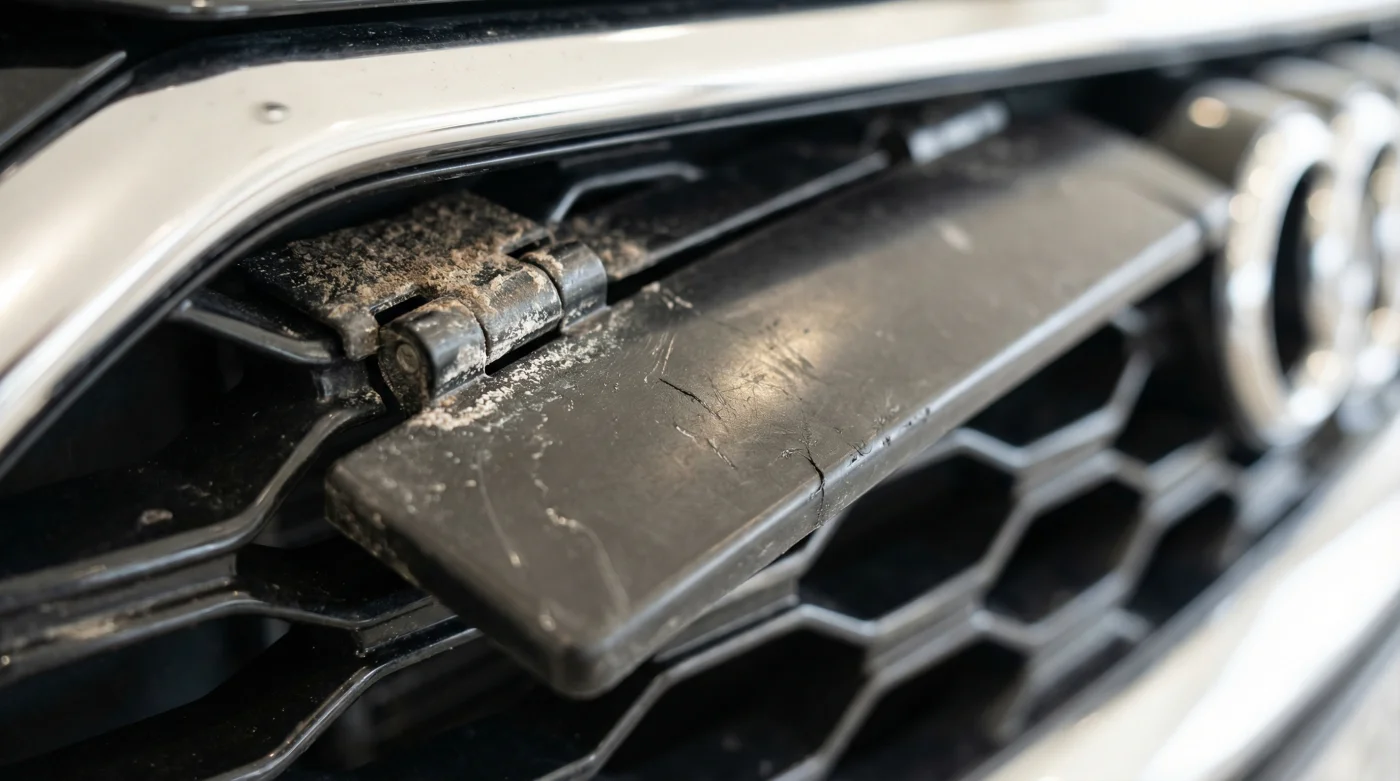
Look closely through the slats before you start the engine. You are not just looking at a radiator; you are looking at a set of active aerodynamic flaps designed to open and close depending on engine temperature. It is an impressive party trick, until the odometer ticks past 40,000 miles and the mechanism begins to spring its hidden trap.
The Hidden Cost of Breathing
The modern 3 Series is treated less like a mechanical tool and more like a thermal management system. The active aero grilles were introduced as a masterstroke of efficiency. The logic is simple: seal the front end on the motorway to cut drag, then open the shutters when the engine needs to breathe.
But think of these flaps as a pair of mechanical lungs operating in the harshest possible environment. They are constantly pelted with grit, salt from British roads, and freezing rain. Over time, the tiny plastic hinges and actuators accumulate microscopic debris, leading the system to demand a deep gulp of air it cannot take.
The mechanism does not fail with a dramatic bang; it dies with a whimper, seizing completely shut. What was engineered to be an aerodynamic benefit suddenly becomes a suffocating mask over your engine bay.
Expert Insight from the Workshop Floor
Spend an hour in the workshop of Alistair Vance, a 54-year-old independent BMW specialist based just outside of Leeds, and you will hear a familiar sigh. “Every week,” he says, wiping grease from a heavy spanner. “People bring in their three-year-old 3 Series complaining of restricted performance warnings or overheating fans.” He points to a discarded front bumper assembly in the corner.
“They argue about how the grille looks on the forums, but they never clean the actuator tracks. At 40,000 miles, the motors just burn themselves out trying to force those plastic shutters open against a wall of dried road salt. It is completely preventable.”
Identifying Your Vulnerability
For the High-Mileage Commuter
If you spend your mornings battling the M1, your aero flaps are taking the brunt of high-speed debris. The constant bombardment of salt and road grime settles into the tracks. Slowly, this accumulation creates a cement-like abrasive paste inside the flap mechanisms.
You might not notice the issue until the temperature gauge creeps past the midpoint during a steep climb. The system tries to cool the engine, but the shutters remain locked tight against the wind.
For the Urban Crawler
Stop-start traffic presents an entirely different threat. The flaps open and close far more frequently to manage the fluctuating temperatures of low-speed driving. Here, it is not necessarily debris that kills the system.
The tiny plastic gears inside the actuator motor wear down through constant micro-adjustments. They eventually strip themselves smooth through sheer mechanical fatigue, leaving the flaps stranded in whatever position they last held.
Mindful Preventative Care
You do not need to wait for a warning light to ruin your week. Taking control of this hidden mechanism is a surprisingly simple process. Treat the front grille with the same care you would apply to your leather seats; it is an active mechanism, not a passive piece of trim.
Mastering this small detail requires only a few minutes of quiet attention on a Sunday morning. Incorporate these steps into your routine:
- Start the engine from cold while a friend watches the front grille. The flaps should cycle open and closed as part of the startup diagnostic.
- Listen closely for any clicking, grinding, or stuttering during this movement. The operation should be entirely silent.
- Use a low-pressure hose to gently rinse the area behind the slats. Never use a high-pressure jet wash directly on the delicate plastic hinges.
- Apply a silicone-based, dirt-repellent dry lubricant to the visible joints twice a year, ideally in October and March.
Your tactical toolkit is incredibly basic. You need to check functionality when the ambient temperature is below 10 degrees Celsius, as the system is most active in managing cold starts. Check the operation every 10,000 miles, and use a standard tin of dry PTFE spray. A six-pound tin will easily save you a hefty dealership replacement bill.
Shifting the Aesthetic Debate
When we argue about the shape of a car’s nose, we lose sight of what makes driving truly satisfying. The true character of a vehicle is not found in a design studio’s sketch; it is found in the quiet competence of its engineering and your relationship with its maintenance.
By understanding the mechanical vulnerability hiding behind that divisive kidney grille, you stop being a passive consumer. You become an active participant in longevity, ensuring your engine breathes freely on every cold, damp morning the British weather throws your way.
“The difference between a well-maintained car and a money pit usually comes down to cleaning the parts nobody told you were moving.”
| Key Point | Detail | Added Value for the Reader |
|---|---|---|
| Aesthetic Grille | Large, divisive kidney design | Understand the real debate isn’t visual. |
| Active Aero Flaps | Open/close for engine temp management | Better fuel economy when working. |
| 40k Mile Seizure | Flaps stick shut due to salt and grit | Preventable £700 bill with basic care. |
Frequently Asked Questions
How do I know if my active aero grille has failed? You will likely experience a check engine light or notice the engine cooling fan running loudly even after short, cold journeys.
Can I force the flaps open myself? No, physically forcing the plastic shutters will break the internal gears of the actuator motor, guaranteeing a costly replacement.
Does my specific 3 Series trim have this feature? The majority of modern UK 3 Series models, regardless of trim, feature active kidney grilles for emissions compliance.
Will a standard dealer service catch this? Rarely. Standard services plug into the diagnostic port; if the motor has not failed completely, intermittent sticking will not log a code.
What is the best lubricant to use on the hinges? Always use a dry PTFE spray. Oil-based lubricants like standard WD-40 will attract more grit and accelerate the seizing process.