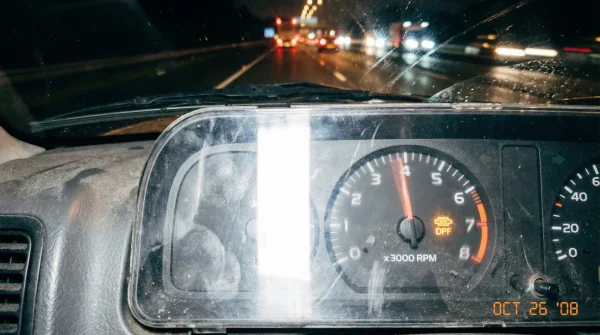
You step onto the damp tarmac of your driveway, breath pluming in the crisp morning air. The frost has settled thick on the glass overnight, a stubborn white crust that demands the heater on full blast. You slip into the driver’s seat, feeling the cold seep through the upholstery, push the clutch to the floor, and turn the key. Instead of the familiar, rhythmic turning of the starter motor, you are met with a desperate, machine-gun rattle. The dashboard flickers. Silence follows.
It is a uniquely frustrating feeling, staring at the steering wheel while realising your morning has just derailed. Most drivers immediately blame the battery itself, assuming its internal chemistry has finally surrendered to the cold. We condition ourselves to accept the inevitable panic, **rummaging for jump leads** or bracing for the painful cost of a sudden replacement at the local garage.
But this assumption is often entirely wrong. The culprit is rarely a dying cell; rather, it is an invisible, continuous thirst hidden deep within the wiring loom. Modern vehicles are restless sleepers, constantly pinging servers, checking sensors, and drawing current long after the engine is off. Yet, stopping this silent drain does not require a diagnostic computer or an expensive garage visit. It relies on a beautifully primitive mechanical intervention.
The Phantom in the Wiring Loom
Think of your vehicle’s electrical system like a massive plumbing network attached to **a single water tank**. When everything works perfectly, turning off the ignition is like shutting the main valve. But as cars age, tiny leaks develop. A sticking relay, a faulty alarm sensor, or a boot light that refuses to switch off in the dark. This is known as a parasitic drain, a quiet thief stealing voltage while you sleep.
Many drivers attempt to outspend this problem, buying expensive trickle chargers or heavy-duty leisure batteries, treating the symptom rather than the cause. This perfectly mirrors the base model philosophy of motoring: sometimes the cheapest, most stripped-back approach is structurally superior to a luxury fix. Why constantly refill a leaking tank when you can simply detach the hose?
By physically disconnecting one specific connection, you sever the circuit entirely. The car becomes **an inert block of metal** and plastic, perfectly safe from its own electrical gremlins. It is a perspective shift that transforms you from a victim of modern electronics into someone who dictates the terms of the machinery.
Meet Arthur Pendelton, a 62-year-old auto electrician working out of a draughty, oil-scented workshop in Leeds. For forty years, Arthur has hunted down invisible electrical faults. He tells a story of a luxury estate car brought to its knees by a faulty Bluetooth module that refused to sleep, draining the battery every forty-eight hours. The dealership quoted hundreds of pounds just to diagnose the fault. Arthur’s advice to the distressed owner was remarkably simple.
“If you are leaving a car standing,” Arthur explains, wiping grease from his hands, “or you know there is **a phantom draw you cannot** afford to fix right now, just pull the earth cable. It takes ten seconds. Manufacturers overcomplicate power management systems, but they cannot argue with a broken circuit. It is the ultimate off switch.”
Adjusting for the Driver
Different cars require slightly different handling before you apply this mechanical reset. Understanding your specific vehicle type ensures you do not trigger alarms or lock yourself out.
For the analogue purist driving an older vehicle, perhaps a late-nineties hatchback or a classic roadster kept for sunny Sundays, your path is **entirely unobstructed by complex computers**. Pulling the cable simply stops the dashboard clock and clears the radio presets. It is the purest form of preservation, returning the car to a dormant state.
For the airport parker, leaving a daily driver in a damp long-stay car park near Heathrow for a fortnight, the risk of a flat battery upon your tired return is high. In this scenario, you must ensure the physical key blade, often hidden inside the plastic smart fob, works smoothly on the driver’s door lock. The central locking will be entirely dead when you return to reconnect the power.
For the modern tech-heavy owner, patience is strictly required. Modern control modules need time to save their data and power down gracefully. If you yank the cable the second you switch off the ignition, you risk **corrupting the engine control unit**. You must let the vehicle fall into a deep digital sleep before intervening.
The Tactical Toolkit
Executing this requires almost zero mechanical skill, just a mindful, deliberate approach. It is about understanding the flow of energy and stopping it safely without causing damage or sparking fear.
Here is exactly what you need to do, **stripped of any confusing jargon**, requiring nothing more than a basic spanner and a few moments of quiet focus:
- Wait fifteen minutes: Close all doors, remove the keys from the ignition, and let the car sit in silence. This allows the internal computers to shut down completely.
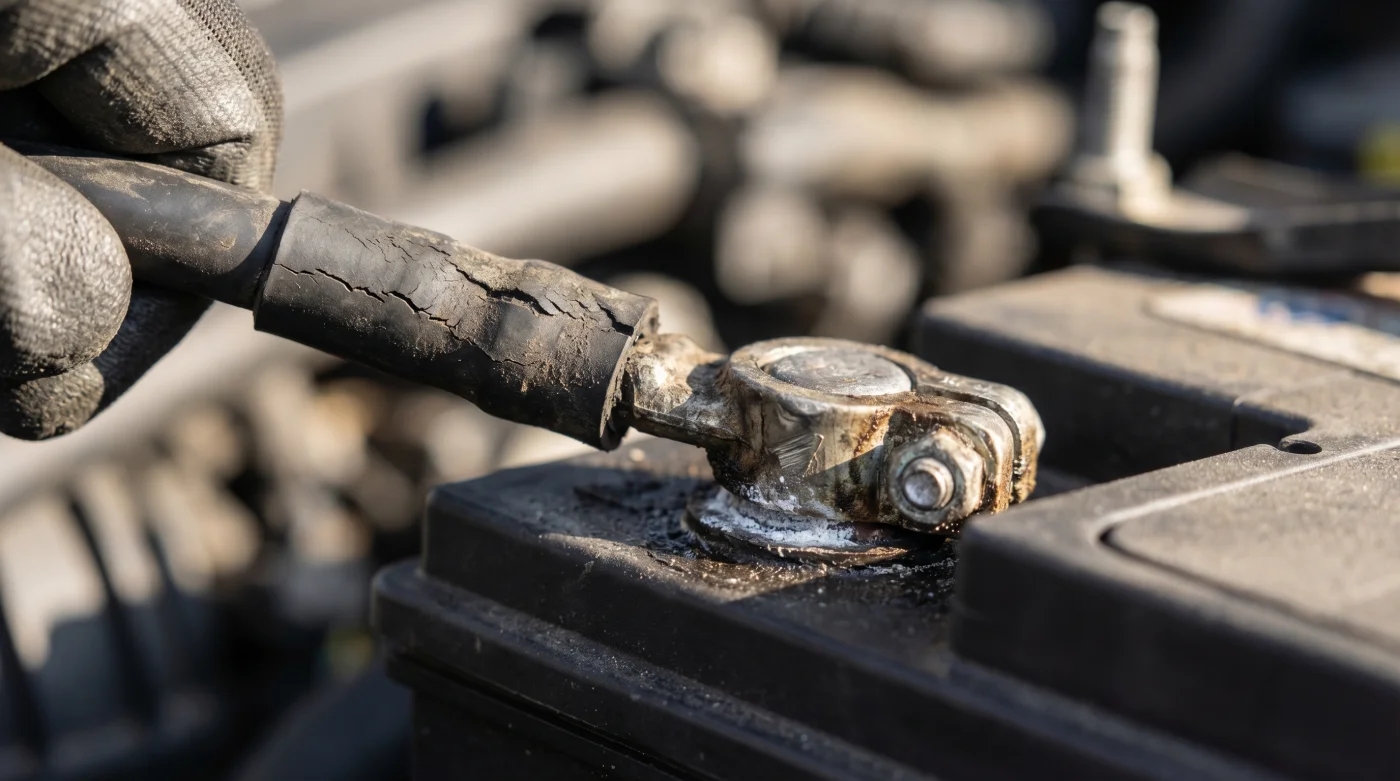
- Locate the negative terminal: Open the bonnet and examine the battery. Find the terminal marked with a minus symbol. The cable attached to it is almost always black.
- Loosen the 10mm nut: Use a standard spanner to slightly loosen the nut clamping the negative cable to the lead post. You do not need to remove the nut entirely; just enough to wiggle the clamp loose.
- Tuck the cable safely away: Pull the black clamp up and off the post. Push it down firmly beside the battery casing, ensuring the metal end cannot spring back and touch the terminal.
When you return to the car, simply push the clamp back onto the post and tighten the nut. Do not flinch if you hear a tiny crackle or see a minor spark; this is merely the system waking up and drawing its initial breath of current.
Mastering this tiny detail does more than just protect your wallet from premature battery replacements. It shifts your entire relationship with your vehicle. We have become accustomed to viewing our cars as sealed boxes, untouchable objects governed by dashboard warning lights and strict dealer schedules. Knowing how to physically intervene **restores a quiet confidence** in your daily motoring life.
It is the deep comfort of knowing that you possess a manual override when the digital systems fail or misbehave.
The next time you park up for an extended period, or suspect a hidden electrical drain is **quietly chewing through your voltage**, reach for that small spanner. A single twist, a quick pull, and the machine sleeps soundly until you decide it is time to wake it.
“Sometimes the most advanced solution to modern automotive complexity is remembering how to use a basic spanner.” – Arthur Pendelton, Auto Electrician
| Key Point | Detail | Added Value for the Reader |
|---|---|---|
| The 15-Minute Wait | Allowing the car’s ECU to power down before disconnecting the battery. | Prevents expensive computer corruption and software reset errors. |
| Target the Negative | Always remove the black cable (marked with a minus sign) first. | Eliminates the risk of a dangerous short-circuit if your spanner touches the chassis. |
| Physical Isolation | Tucking the disconnected cable away from the lead post. | Guarantees zero parasitic drain, saving you from a £150 battery replacement. |
Frequently Asked Questions
Will pulling the battery cable reset my car’s computer?
Yes, it will clear short-term memory, meaning your radio presets may vanish and the engine might idle slightly differently for a few miles as it relearns your driving style.
Is it dangerous to touch the battery terminals?
Car batteries run at 12 volts, which cannot break human skin to shock you. However, creating a bridge between the positive terminal and the metal car body with a tool will cause severe sparks.
Why should I not pull the red positive cable instead?
If your spanner touches the metal body of the car while unbolting the positive terminal, it creates a direct, massive short circuit. Unbolting the negative earth removes this risk entirely.
Will my car alarm go off when I reconnect the power?
In some older models, the alarm may sound briefly when the circuit is restored. Simply have your key fob ready to press the unlock button immediately.
How long can a car sit with the battery disconnected?
A healthy, disconnected lead-acid battery can hold a starting charge for up to six months in moderate weather conditions, far outlasting a connected battery.