Rain drumming on a corrugated tin roof, the scent of hot engine oil and damp overalls hanging thick in the air. You stand in the doorway of a local MOT test centre, watching an inspector tap the underbelly of a car with a steel spanner. Showrooms smell like lemon polish and promises, but the real truth of a car’s lifespan is written here, over the grease-stained inspection pits.
The modern car industry pushes you relentlessly towards the hybrid trim. You are sold visions of silent creeping through city traffic, digital dashboards glowing with green leaves, and the smug satisfaction of saving pence at the petrol pump. It feels like the responsible, sophisticated choice for the modern driver.
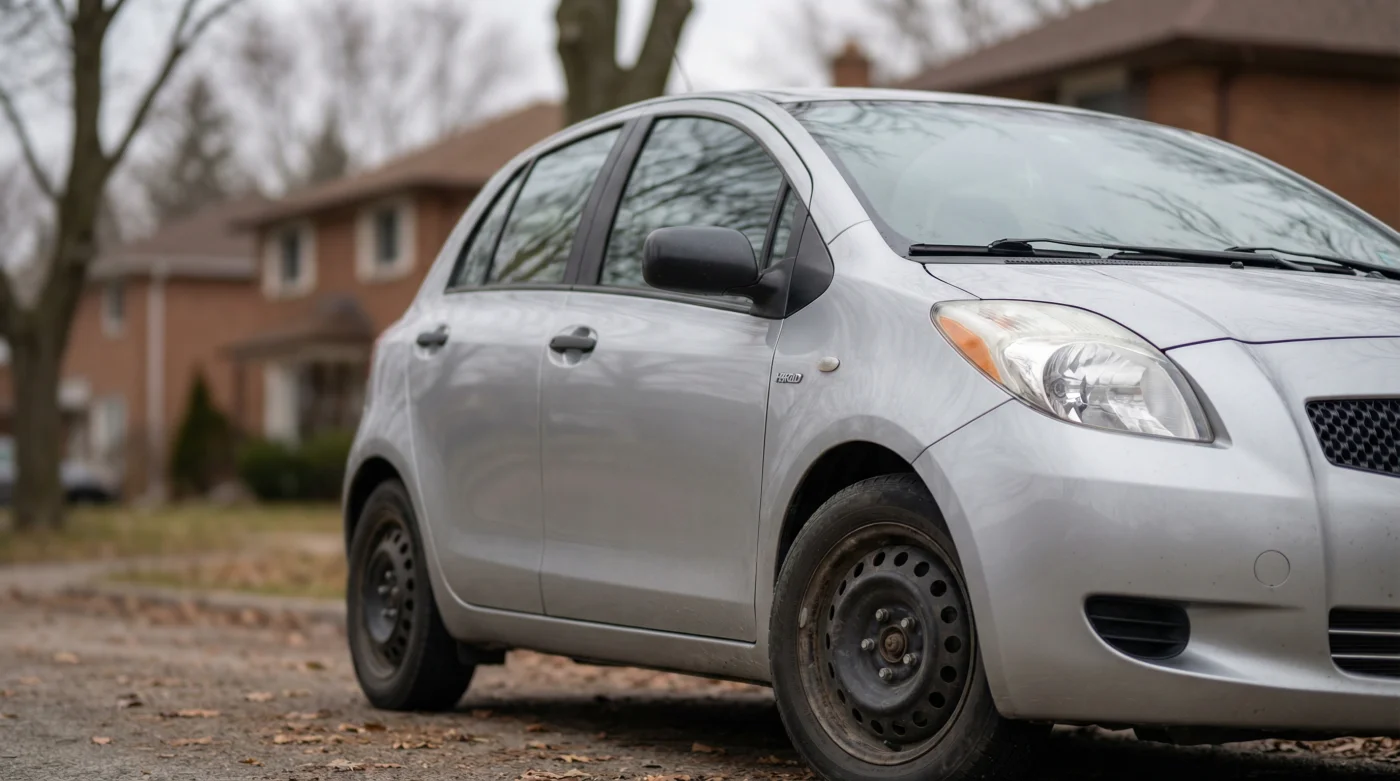
Yet, if you linger long enough around the people who fix these machines for a living, you start to hear an entirely different narrative. The entry-level, naturally aspirated petrol Toyota Yaris—the one missing the heavy battery packs and the complicated electrical wizardry—is quietly outliving its premium, hybrid siblings by a staggering margin.
A stark financial reality hides behind the eco-friendly marketing materials. While the hybrid dazzles in its first five years, the standard petrol base model plays a much longer game, neatly sidestepping a guaranteed, catastrophic repair bill that waits patiently in the shadows.
The Mechanical Sandglass
When you purchase a hybrid vehicle, you aren’t just buying a car; you are buying a chemical sandglass. Lithium-ion and nickel-metal hydride batteries degrade with every charge and discharge cycle, a slow fading of capacity that accelerates sharply right around the ten-year mark. Replacing that main traction battery pack costs thousands of pounds, often outstripping the residual value of the car itself.
The base model petrol Yaris flips this modern anxiety on its head. Stripped of the complex interplay between electric motors, high-voltage inverters, and heavy battery cells, the base model relies on a beautifully simple, naturally aspirated engine. It possesses a mechanical heartbeat rather than a delicate digital one.
Instead of worrying about voltage drops and individual cell degradation, you are simply managing metal, oil, and air. A basic three-cylinder engine, when given clean fluids and fresh filters, stubbornly refuses to die. The lack of standard electrical equipment suddenly transforms from a perceived showroom compromise into a heavy shield against forced obsolescence.
The Yorkshire Fleet Master
David is a 58-year-old fleet mechanic based just outside Sheffield, managing dozens of local courier and care-worker vehicles. He spends his weeks nursing small hatchbacks through gruelling urban stop-start traffic and heavily potholed B-roads. “The hybrids are lovely until the extended warranty expires,” he mutters, wiping black grease from a frayed ledger. “Around year eight or nine, the hybrid system warning lights start flashing, and the car is suddenly worth nothing but scrap value. But those basic 1.0-litre and 1.5-litre petrol base models? We have them sitting easily on 180,000 miles. You change the oil every ten thousand, and they simply outlast the rust.” He treats the lowest trim level not as a budget restriction, but as a highly calculated strategy to avoid the ten-year battery failure trap.
Which Base Setup Suits You
Not all base models wear their mechanical simplicity the same way. Depending on how you navigate the British road network, the bare-bones approach offers distinctly different structural advantages.
For the Urban Crawler: If your daily routine involves aggressive roundabouts and tight supermarket car parks, the standard petrol engine shines brightly. Hybrids are naturally heavy. Dragging an extra 150 kilograms of dead battery weight over harsh speed bumps wears down suspension bushes, shocks, and brake pads prematurely. The lighter, standard petrol variant handles like a nimble terrier, skipping lightly over tarmac imperfections and saving money on consumable chassis parts.
For the High-Mileage Commuter, spending hours on the M1 or the A14 requires a predictable, rhythmic machine. While a hybrid powertrain offers minimal fuel benefit at a constant 70 mph, a standard petrol engine settles into a steady, unstressed hum. You aren’t paying a premium price tag for an electric motor that sits entirely dormant at motorway cruising speeds.
For the Long-Term Custodian: If you view a car as a fifteen-year household appliance rather than a three-year lease rotation, the base model is your absolute fortress. You will never lie awake dreading a sudden dashboard warning chime that signals a £2,500 battery replacement. The maintenance schedule is entirely transparent, affordable, and deeply predictable.
Mastering the Analogue Machine
Keeping this simple machine running indefinitely requires stepping away from the dealership’s generic, extended service intervals. It is about adopting a few focused, minimalist habits and listening to the mechanical feedback of the car rather than waiting for a smartphone app to notify you of a fault.
Treat the engine fluids with absolute religious devotion, completely ignoring the extended 20,000-mile service intervals designed solely to make fleet lease deals look cheap on paper.
- Oil changes: Stick strictly to 0W-16 or 0W-20 fully synthetic oil, replacing it every 8,000 miles or twelve months, whichever arrives first to prevent timing chain wear.
- Coolant flushing: Drain and replace the pink Toyota Super Long Life Coolant at the five-year mark, then rigorously every three years after that to protect the water pump.
- Gearbox oil: For the manual gearboxes, swap the transmission fluid at 60,000 miles. It removes metal shavings and keeps the gear shifts feeling crisp and precise.
- Underbody protection: Given the heavy road salt spread across UK roads from November to March, a yearly lanolin-based rustproofing spray under the chassis pays massive long-term dividends.
- Tactical Toolkit: Keep a high-quality analogue tyre pressure gauge in the glovebox (checking pressures bi-weekly), a 10mm and 14mm socket set for basic filter changes, and a spare set of silicone wiper blades.
The Freedom of Simplicity
There is a profound, quiet luxury in owning a machine that you entirely understand. In an era where modern vehicles are rapidly becoming rolling smartphones, trapped in forced software updates, subscription heated seats, and planned obsolescence, buying the entry-level Yaris feels like a deliberate act of mechanical rebellion.
Choosing the lowest trim is rarely a sign of financial constraint; it is a highly astute acknowledgement of mechanical reality. You are firmly rejecting the fragile complexity of the modern hybrid premium trap, opting instead for a vehicle that respects your time, your wallet, and your mental peace.
When your neighbour’s shiny, tech-heavy runabout is being winched onto a recovery truck because a proprietary hybrid inverter module suddenly failed, you will turn the physical key in your petrol base model, hear that familiar, slightly gruff idle, and simply drive away.
“The greatest trick the modern automotive industry ever pulled was convincing buyers that complex electrical addition equals long-term value, when true longevity has always lived in mechanical subtraction.”
| Key Point | Detail | Added Value for the Reader |
|---|---|---|
| Battery Failure Cycle | Hybrid batteries heavily degrade and fail around year 10, costing thousands to replace. | Avoids a catastrophic depreciation cliff; the base petrol model holds consistent value. |
| Kerb Weight | Petrol base models are roughly 150kg lighter than their hybrid counterparts. | Reduces wear on suspension, tyres, and brakes, saving hundreds in MOT repairs. |
| Maintenance Simplicity | Naturally aspirated engines require only basic oil, filter, and spark plug changes. | Allows for cheap independent garage servicing instead of expensive main dealer rates. |
Is the base Yaris petrol engine powerful enough for motorways?
Yes. While it won’t win any drag races, the 1.0L or 1.5L naturally aspirated engines sit very comfortably at 70 mph, returning excellent fuel economy without the extra weight of hybrid systems holding them back.When exactly do hybrid batteries usually start failing?
Most hybrid traction batteries show significant capacity loss by year eight, and total cell failures commonly occur between years ten and twelve, heavily dependent on charge cycles and temperature extremes.Does a base model hold its resale value in the UK?
Surprisingly, yes. Because savvy used-car buyers are terrified of inheriting a dead hybrid battery, a well-maintained, ten-year-old pure petrol Yaris is highly sought after on the second-hand market.Can I service the base model myself?
Absolutely. The base petrol engines are incredibly accessible. Basic oil changes, air filters, and spark plug replacements can be done on your driveway with a standard socket set and minimal mechanical experience.Why do dealers push the hybrid so hard?
Dealerships operate on manufacturer quotas tied to fleet emissions targets, and hybrids carry higher profit margins on both the initial sale and the specialised dealer-only servicing required later on.