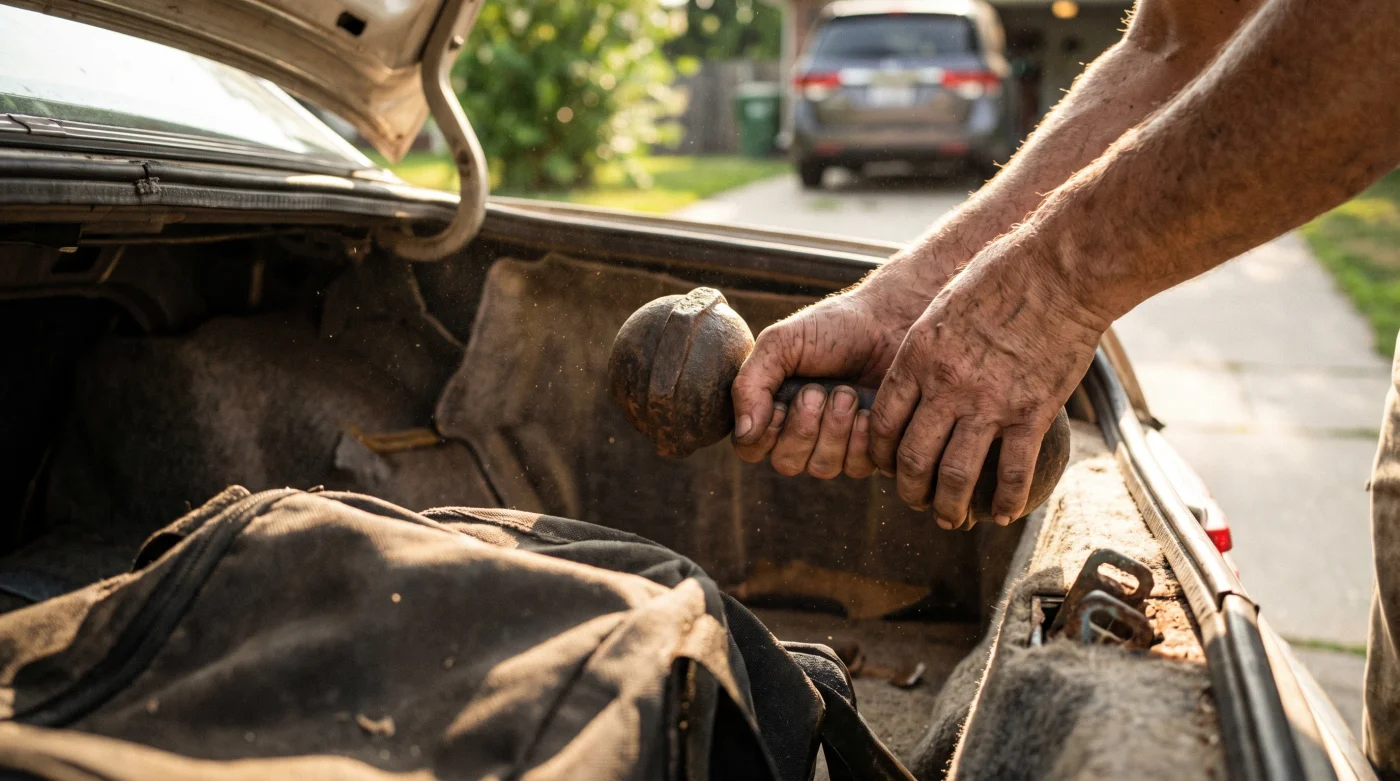
It happens on those damp, grey Tuesday mornings when the frost is just starting to bite at the edges of the windscreen. You press the key fob, pop the latch, and toss your gym bag into the cavern at the back of the car. It lands with a muted thud against a half-empty bag of compost, three stray wellington boots, and a heavy-duty trolley jack you bought on a whim last October.
Most of us ignore this creeping accumulation, treating the space behind the rear seats as a sort of mobile attic where decisions are deferred indefinitely. It feels like a harmless habit, a symptom of a busy week blending into a chaotic month. You shut the lid, climb into the driver’s seat, and watch the fuel gauge dip slightly lower than you remember.
The truth is quite different, shifting this scene from a mild domestic irritation to an active financial drain. A car engine is a creature of physics, relying on a delicate balance of combustion and momentum to push a metal box down the M1. Every unneeded item you leave rattling over the rear axle is quietly demanding more petrol, robbing you of miles and draining pounds from your bank account.
The Physics of the Rucksack
Asking a small hatchback to haul a boot full of forgotten clutter is like asking someone to breathe through a pillow while climbing a steep flight of stairs; the engine is simply suffocating under the load. If you forced a marathon runner to carry a rucksack filled with old magazines and a bag of gravel, their heart rate would spike and their energy would plummet. Your vehicle responds to extra weight in exactly the same way, forced to burn extra fuel just to maintain momentum.
This is the silent theft occurring beneath the parcel shelf every single day. Automotive engineers spend thousands of hours and millions of pounds swapping steel parts for aluminium, shaving off ounces to meet strict efficiency targets. By leaving two folding chairs and a crate of old books in the back, you are entirely reversing their hard work, forcing the engine to gulp down extra petrol at every traffic light.
The reality becomes clear when you realise your laziness is acting as a literal anchor on efficiency. Taking out the junk is the ultimate base-model secret; a method of reclaiming the factory-standard fuel economy that you are currently masking beneath a layer of domestic detritus.
Gareth, a 54-year-old former fleet mechanic from Leeds, spent a decade managing delivery vans where tight margins meant everything. He noticed drivers treating the cargo bays as personal sheds, accumulating broken pallets, forgotten tools, and heavy wet-weather gear. He instituted a strict Friday weigh-in, pulling out anything that did not serve the immediate route. ‘People focus on tyre pressure or expensive premium fuels,’ he used to tell his apprentices, leaning over a stripped-out chassis. ‘But carrying dead weight is like driving with your foot resting on the brake pedal; take out the junk, and the car practically breathes a sigh of relief.’
Identifying Your Weight Penalty
We all fall into distinct patterns of hoarding based on our lifestyles and anxieties. Recognising your specific style of clutter is the first step to curbing the hidden petrol tax that you pay every single time you visit the pumps.
For the ‘Just in Case’ Driver: You are carrying a heavy-duty tow rope, three litres of undiluted screenwash, a set of jump leads, and snow chains, despite living in Cornwall where it has not properly snowed in a decade. This doomsday preparation is adding upwards of twenty kilograms to your kerb weight. The car requires extra energy to accelerate this mass from a standstill, eating heavily into your urban economy.
- Hide Door Scratches Fast With A Little Mint Toothpaste
- Stop Car Smells Fast By Using Plain Coffee Grounds
- Melt Windscreen Ice Fast With This Simple Water Trick
- Drop Tyre Pressure To Stop Sliding On Winter Ice
- Fix Cloudy Headlights With Baking Soda In Two Minutes
- Stop Car Battery Drain With One Simple Cable Trick
- Clean Wiper Blades With White Vinegar For Clear Glass
- The New DVSA MOT Rule Catching Drivers Off Guard
- Why Leapmotor Is Crushing Local UK Car Prices Today
- The Motorway Secret Reviving Blocked DPF Filters Instantly
Parents know the boot quickly becomes a graveyard for outgrown coats, muddy football boots, folded buggies, and forgotten picnic blankets. Fabric absorbs moisture from the damp winter air, making it heavier over time. Removing this seasonal debris not only saves petrol but eliminates that lingering, musty damp smell when you turn the heating on.
For the Weekend Hobbyist: Golf clubs are notoriously heavy. So are bags of climbing gear, toolbox sets, and boxes of vinyl records you keep meaning to drop at the charity shop. Leaving a set of irons in the boot all week for a single Sunday morning tee-off is a fast track to wasting fuel during your Monday to Friday commute.
The Mindful Purge
Changing this habit requires a quiet Sunday afternoon where you completely reset the baseline of what lives in your vehicle. Park on a flat surface, open all the doors to let the air circulate, and pull absolutely everything out onto the driveway. The boot should be completely bare, revealing just the carpet and the spare wheel well underneath.
Sort the items with ruthless pragmatism, separating the pile into things that belong in the house, things that belong in the bin, and the tiny fraction that genuinely belongs in the car.
- Remove all seasonal items the moment the season ends; do not let winter shovels linger into spring.
- Swap heavy, liquid bottles of cleaner or oil for small, single-use emergency pouches if you must carry them.
- Take out sports equipment the moment you return home; make it part of the unpacking ritual alongside taking off your shoes.
- Inspect the spare wheel well for trapped water or hidden heavy debris, vacuuming it clean to prevent rust and remove dampness.
Build your tactical toolkit strictly, keeping only a high-visibility jacket, a warning triangle, a small first aid kit, the locking wheel nut key, and your puncture repair kit. Remove heavy toolboxes, gallons of spare fluids, sporting goods, pet cages when the dog is not travelling, and any item waiting to be donated or recycled.
Maintaining this empty space requires a conscious shift in how you view your vehicle. It is a mode of transport, not a secondary storage unit for items you cannot be bothered to carry through the front door.
Lighter Loads, Quieter Minds
It is a subtle mechanical harmony restored once the burden is gone and the boot is empty. The steering responds with a fraction more eagerness, the braking requires slightly less pressure, and the suspension absorbs the rough tarmac rather than crashing heavily through it.
You regain a quiet satisfaction every time you pull up to the petrol pump, knowing you are not paying to transport a bag of potting soil you bought three weeks ago. The interior of the car feels less like a messy cupboard and more like a purposeful machine designed strictly for forward motion.
You are taking control of your daily environment, cutting the quiet drag of procrastination, and allowing your engine to work exactly as it was designed to. You buy less petrol today simply by leaving yesterday’s junk behind.
Emptying your boot is the only car modification that costs absolutely nothing, yet pays you back every time you turn the ignition key.
| Key Point | Detail | Added Value for the Reader |
|---|---|---|
| The ‘Just in Case’ Weight | Carrying 20kg of unneeded tools and fluids. | Stop burning fuel to accelerate useless mass in stop-start traffic. |
| The Weekend Hobbyist Trap | Leaving golf clubs or sports gear in the car all week. | Save money Monday to Friday by storing heavy gear in the garage. |
| The Moisture Tax | Damp coats and muddy boots absorb water, adding weight. | Keep the interior smelling fresh and reduce window condensation. |
Frequently Asked Questions
Does a heavy boot really make a noticeable difference to fuel consumption?
Yes. While it may seem minor, carrying an extra 50kg can reduce your fuel efficiency by up to two percent, which quickly drains your wallet over thousands of miles.What safety items should I actually keep in the boot?
Stick to the practical basics: a warning triangle, a high-visibility jacket, a compact first aid kit, and your locking wheel nut key.Does removing the spare wheel save petrol?
It does save weight, but the risk of being stranded with a blowout far outweighs the pennies saved. Always keep the spare wheel or manufacturer-supplied repair kit.How often should I clear out the back of the car?
Make it a weekly habit. A quick Sunday sweep prevents the slow, invisible buildup of items over the month and resets your fuel economy.Why does extra weight affect stop-start driving more than motorway cruising?
Accelerating a heavy mass from a dead stop requires a massive surge of engine power, whereas maintaining a steady speed relies more on aerodynamics.