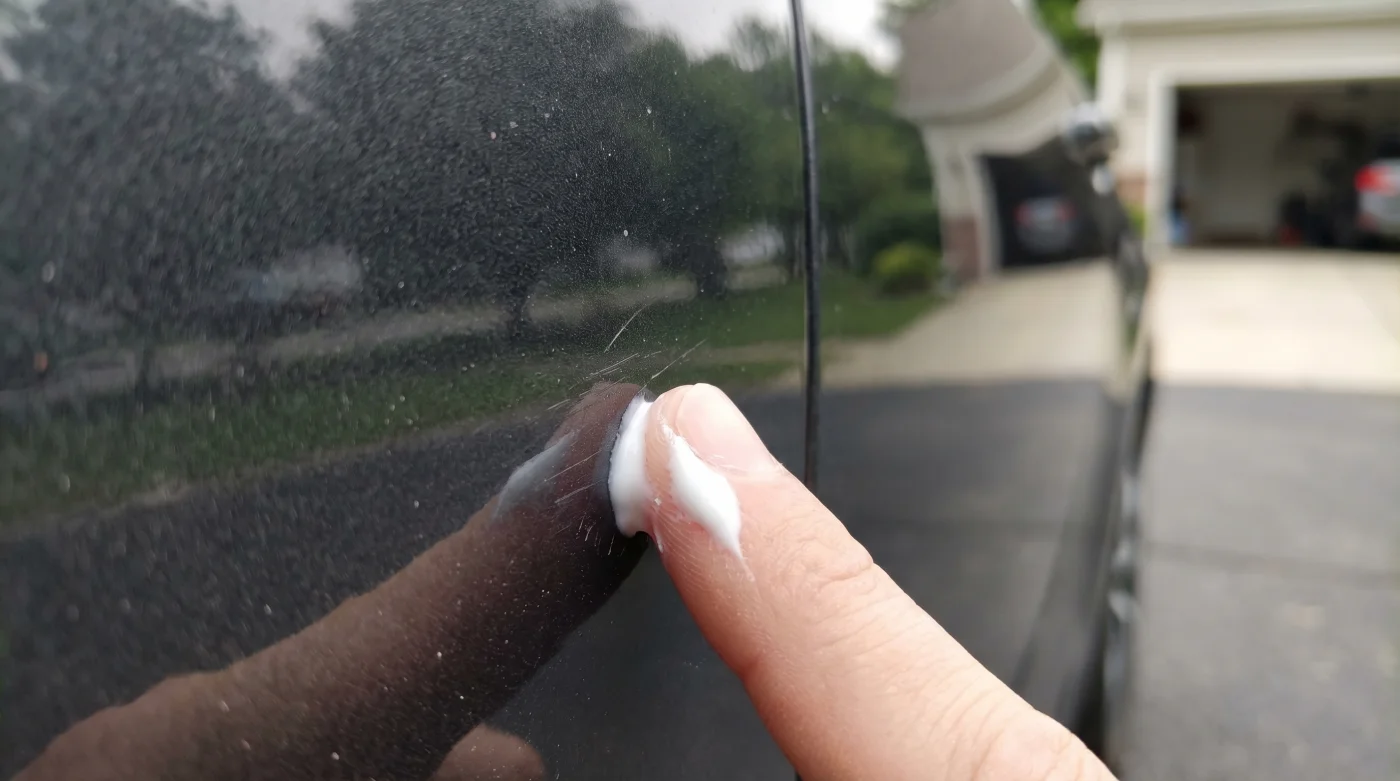
The morning is crisp, smelling faintly of wet tarmac and stale exhaust fumes. You walk up to your car, keys in hand, and stop dead. There it is: a blunt, ugly white streak slashed across the driver’s side door. It is the signature of a careless supermarket trolley, a rushed commuter, or perhaps a momentary lapse of awareness against a low garden wall. The metal feels cold under your thumb as you trace the jagged edge of the intrusion.
Your mind instantly calculates the damage. You picture the local body shop, the sharp intake of breath from the mechanic in oil-stained overalls, and a quote stretching well north of three hundred pounds. Recent surges in repair costs have turned minor cosmetic fixes into major financial headaches. The automotive repair sector is currently experiencing a massive price shift, driven by soaring energy bills for spray booths and a severe shortage of skilled technicians. Professional touch-ups have shifted from routine maintenance to an absolute luxury.
But before you resign yourself to an empty wallet or a permanently scarred vehicle, you need to turn around and walk back inside your house. You do not need a heavy-duty rotary polisher, an expensive chemical cocktail, or a weekend of intensive labour to buff the paint.
There is a quiet, incredibly effective alternative sitting right next to your toothbrush. It requires nothing more than a damp cloth, five minutes of your morning, and a willingness to rethink the mechanics of minor abrasions. The secret to reclaiming your vehicle’s dignity is waiting in the bathroom cabinet.
The Micro-Abrasive Secret
We tend to view car paint as a fragile sheet of glass, assuming any mark is a catastrophic fracture that penetrates straight to the bone of the vehicle. In reality, modern automotive paint is a thick, highly resilient layered structure. There is the bare steel or aluminium bodywork, the chemical primer coat, the fragile colour base, and finally, a thick, protective resin known as the clear coat. Most door scratches never actually penetrate the colour; they merely bruise the clear coat or leave behind a stubborn residue from the offending object.
This is exactly where a simple tube of mint toothpaste shifts from a daily hygiene product to a highly capable mechanical asset. Traditional mint paste—specifically the chalky, opaque white variety, avoiding any translucent gels—is packed with hydrated silica. In the world of detailing, this acts exactly like a mild rubbing compound. It is a suspension of microscopic grit designed to polish away plaque, but it does not know the difference between enamel and polyurethane.
Think of it as breathing through a pillow; it’s softening the harsh, glaring edges of the damage rather than attacking the core structure. When you apply it to the clear coat, the microscopic grit gently sands down the jagged edges of the scratch, levelling the surface so light no longer catches the groove. You are quite literally erasing the shadow of the damage, manipulating the reflection of light to make the scar disappear.
Arthur Pendelton, a fifty-eight-year-old independent detailer working out of a draughty lock-up in West Yorkshire, has been quietly leveraging this logic for decades. “People panic and bring me cars with paint transfer from a concrete bollard, expecting to finance a massive respray,” he notes while wiping his hands on a blue shop towel. Before firing up the polisher, Arthur rubs a dab of cheap supermarket toothpaste over the mark with his bare thumb. If the white mint clears the cloudiness, he knows it is a superficial wound. It is his primary diagnostic tool, and remarkably often, his only necessary cure before handing the keys back to a bewildered, relieved customer.
Assessing the Scratch Profile
Not all blemishes are created equal, and treating them as such is a fool’s errand. Before you commit to the minty remedy, you must categorise the wound on your door panel. Understanding the scratch profile prevents you from wasting time on a lost cause or, worse, making a deeper gauge infinitely more visible.
For the Superficial Paint Transfer
This happens when another car’s bumper or a painted post leaves its physical DNA on your door. The scratch isn’t a valley; it is a ridge. You will feel it sitting proud of the surface. Toothpaste is exceptionally aggressive against foreign paint, breaking the bond and lifting the ugly door marks away without traumatising your own clear coat underneath.
For the School-Run Spiderwebs
School car parks and narrow driveway bushes are notorious for inflicting faint, wispy marks along the flank of a car. Run your fingernail lightly over the line. If your nail glides across without catching or clicking, the damage is incredibly shallow. The toothpaste will buff this into total invisibility, smoothing the micro-trench until the surface reflects perfectly again.
- Stop Car Smells Fast By Using Plain Coffee Grounds
- Melt Windscreen Ice Fast With This Simple Water Trick
- Drop Tyre Pressure To Stop Sliding On Winter Ice
- Fix Cloudy Headlights With Baking Soda In Two Minutes
- Stop Car Battery Drain With One Simple Cable Trick
- Clean Wiper Blades With White Vinegar For Clear Glass
- The New DVSA MOT Rule Catching Drivers Off Guard
- Why Leapmotor Is Crushing Local UK Car Prices Today
- The Motorway Secret Reviving Blocked DPF Filters Instantly
- The Controversial Design Choice Ruining The New BMW 3 Series Grille
For the Lease-Holder’s Nightmare
When returning a lease vehicle, inspectors carry heavily calibrated light wands, charging exorbitant penalty fees for every visible scuff. If you have a clear-coat graze, treating it with toothpaste a week before the handover can save you hundreds of pounds in cosmetic deductions. Here the paste acts as a financial shield, returning the panel to a totally acceptable standard.
The Bathroom Cabinet Intervention
Execution requires a gentle touch and a methodical approach. You are not scrubbing a burnt frying pan; you are carefully massaging a delicate, easily marred surface. Gather your basic provisions before stepping out onto the driveway.
- One tube of standard white mint toothpaste (avoid translucent gels, baking soda, or charcoal variants as they are too coarse).
- Two clean, high-pile microfibre cloths.
- A spray bottle filled with lukewarm tap water.
- A small dollop of liquid automotive wax (optional, but highly recommended for longevity).
Begin by washing the affected area of the door with soapy water to remove any loose road grit. If you trap a particle of sand under your cloth, you will drag it across the paint, creating ten new scratches for every one you attempt to hide. Work in circular motions, applying light, even pressure over the scratch. Keep your movements tight and strictly contained to the immediate area of the blemish.
Squeeze a pea-sized amount of toothpaste onto a damp microfibre cloth folded into quarters. This gives you a flat, even pad to work with. Gently work the paste into the scratch, letting the hydrated silica do the cutting. Do not lean into the panel; let the grit do the heavy lifting.
Check your progress every thirty seconds. Wipe the area clean with your second, lightly damp cloth to see if the ugly door marks are fading. Once the paint feels completely smooth to the touch and the white line has vanished into the surrounding reflection, stop rubbing immediately. Rinse the panel thoroughly to remove any lingering chalky residue, dry it gently, and apply a quick layer of car wax to seal the freshly levelled clear coat against the brutal British weather.
Reclaiming the Driveway
There is a profound, quiet satisfaction in repairing something with your own hands, especially when the solution actively defies conventional, expensive logic. By stepping outside the dictated consumer cycle, you insulate yourself against the sudden price hikes and delays of the modern automotive repair sector.
You realise that a car is a living tool meant to navigate an unpredictable world, and acquiring minor battle scars is an absolutely inevitable part of its working life. Knowing how to resolve them without anxiety, waiting lists, or immense financial strain fundamentally changes your relationship with the vehicle.
You are no longer at the mercy of minor parking misfortunes or careless strangers. A scuffed door becomes nothing more than a five-minute chore on a Saturday morning, accompanied by the faintly absurd, highly reassuring scent of fresh mint.
The best tools in automotive care are often the simplest; physics does not care how much you spent on the compound.
| Key Point | Detail | Added Value for the Reader |
|---|---|---|
| Hydrated Silica | The mild abrasive naturally found in white toothpaste. | Levels out clear-coat ridges without buying costly rubbing compounds. |
| The Fingernail Test | Checking if a scratch physically catches your nail. | Saves you time by instantly diagnosing if a DIY fix is actually possible. |
| Cost Insulation | Avoiding local body shops for purely cosmetic scuffs. | Protects your wallet from recent severe industry price hikes and wait times. |
Frequently Asked Questions
Can I use a charcoal toothpaste for this trick?
No, charcoal and heavy baking soda variants are far too aggressive and will likely dull your clear coat permanently.
Does this work on deep key marks?
If the scratch reveals grey primer or bare metal, you will need a dedicated paint pen; toothpaste cannot replace missing colour.
Why must I use a microfibre cloth?
Paper towels and kitchen roll contain harsh wood fibres that introduce microscopic swirl marks into your paint.
Should I apply heavy pressure when buffing?
Keep it light; let the microscopic grit do the heavy lifting rather than straining your shoulder muscles.
Do I absolutely need to wax the area afterwards?
Yes, buffing strips the thin protective layer, so reapplying car wax prevents future weather damage and fading.