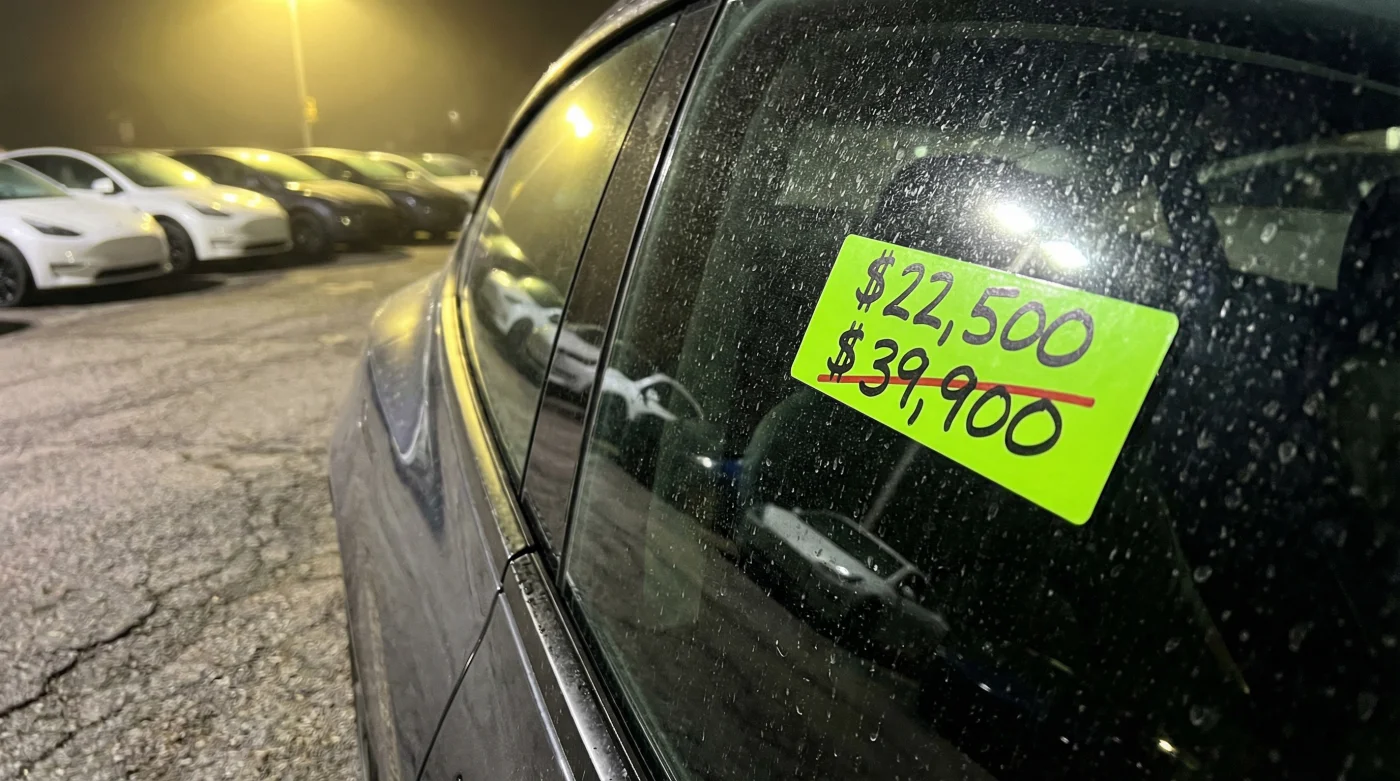
You wake up, switch on the kettle, and glance at your phone. The kitchen is quiet, save for the faint rattle of boiling water and the hum of the fridge. But your screen is delivering a loud shock. A notification from a motoring site tells you the news: the list price of a brand-new Tesla Model 3 has just dropped by 10 percent. Overnight, the numbers on your personal balance sheet have forcibly shifted.
If you bought one recently, thousands of pounds simply evaporated while you slept. The equity in your driveway bled out like warmth from an open window, leaving you staring at a financial deficit that did not exist when you parked the car last night.
You probably assumed a premium electric vehicle was a relatively stable place to park your money. Traditional logic dictated that these cars would glide down the depreciation curve gently, much like a well-specced diesel saloon from Munich or Stuttgart. You kept it clean, avoided kerbing the alloy wheels, and trusted the market to behave rationally.
But the reality of the modern forecourt is far more volatile. Cars are now consumer electronics, trading on the same ruthless whims as last year’s smartphones and laptops. The metal matters far less than the margin.
The Smartphone Depreciation Curve
We need to rethink how we value the machines sitting outside our homes. For a century, a car’s worth was tied to its mechanical integrity—how well the engine ran, the condition of the gearbox, the wear on the leather. It was a physical asset that degraded predictably over time, miles, and usage.
Today, a vehicle like the Model 3 is effectively a rolling software shell. When a tech manufacturer suddenly slashes the price of their newest hardware to stimulate sales or clear inventory, the second-hand market does not adjust gradually. It drops instantly, matching the new baseline with the blunt force of a dropped spanner.
Meet Julian, a 42-year-old independent motor trader operating out of a small, immaculate unit in Surrey. He has spent his career buying and selling premium German estates, but pivoted to EVs three years ago. Yesterday, the three nearly-new Model 3s sitting under his showroom lights were prime, profitable stock. Today, he is nursing a black coffee, staring at a £12,000 hole in his inventory value before he has even unlocked the doors. ‘They do not depreciate like cars,’ he mutters, rubbing his temples. ‘They re-price like tech shares on a bad morning.’
This sudden MSRP reduction wipes out used market equity with terrifying speed. It defies every historical expectation we have about residual values, forcing us to entirely separate the physical usefulness of the vehicle from its financial identity.
Adjusting to the New Forecourt Reality
Depending on where you stand in the ownership cycle, this market shock demands a highly specific response. The absolute worst thing you can do right now is react with panic.
For the Current Owner: If you own your Model 3 outright or are halfway through a traditional personal loan, your primary defence is simply to do nothing. Stop checking the valuation sites. The car still has the exact same range, the same acceleration, and the same utility it had yesterday. You only realise the financial loss if you attempt to sell it today. Keep driving it.
For the Prospective Buyer: The used market is currently in a state of chaotic over-correction. Panicking dealers and private sellers are drastically slashing prices to free up capital, meaning the barrier to entry for a high-performance EV has never been lower. It is a buyer’s playground.
- Test new Leapmotor cars to feel real cheap speed
- Empty Your Car Boot To Save Money On Petrol
- Hide Door Scratches Fast With A Little Mint Toothpaste
- Stop Car Smells Fast By Using Plain Coffee Grounds
- Melt Windscreen Ice Fast With This Simple Water Trick
Mindful Application: Buying in a Downward Market
If you are looking to capitalise on this sudden price cut, you need to approach the used market with clinical detachment. Do not be wooed by the first heavily discounted price tag you see online.
Evaluate a potential purchase using a strict, emotionless set of criteria. Focus entirely on the health of the battery hardware and the specific iteration of the technology, rather than the cosmetic appeal of the paintwork or the badge.
Follow these specific, mindful steps when inspecting a freshly devalued used EV:
- Check the battery degradation by viewing the maximum range at a 100 percent charge on the main screen, comparing it directly to the original factory specification.
- Examine the tyre tread depth across the entire width; EVs chew through heavy rubber, and replacing all four corners will instantly wipe out any perceived purchase savings.
- Verify the exact hardware iteration. A late 2021 model features the updated heat pump and double-glazed windows, making it vastly superior to a 2020 plate, despite looking identical from the pavement.
- Inspect the lower sills and jacking points for scrape damage, as the heavy battery packs make residential speed bumps a genuine, expensive hazard.
Here is your Tactical Negotiation Toolkit: Look for cars with between 30,000 and 45,000 miles. They have absorbed the harshest brunt of the depreciation hit but still retain the balance of the crucial 8-year or 100,000-mile battery and drive unit warranty. Bid firmly, knowing the dealer is eager to cycle the risky stock off their books.
The Bigger Picture
It is deeply unsettling to watch the financial value of a major purchase evaporate over breakfast. We are culturally conditioned to view our vehicles as a form of rolling wealth, a reliable safety net we can cash in if circumstances change.
But mastering this new automotive reality requires a profound shift in perspective. A modern electric car is not a high-yield savings account. It is a highly efficient, incredibly complex appliance designed to move you from your home to your workplace with zero tailpipe emissions and minimal physical effort.
When you detach your financial ego from the metal on your driveway, the fluctuating numbers on a valuation screen lose their power. You are no longer held hostage by a tech billionaire’s aggressive pricing strategy. You simply unplug the cable, drop the car into gear, and get on with your day.
The moment you stop treating a car as an investment portfolio, you reclaim the joy of simply driving it.
| Key Point | Detail | Added Value for the Reader |
|---|---|---|
| The Tech Valuation Shift | EVs price-drop like smartphones, not mechanical cars. | Prevents panic-selling by framing the loss as a sector-wide hardware adjustment. |
| PCP Protection | The GMFV shields leased drivers from negative equity. | Provides peace of mind for those trapped in a devalued finance agreement. |
| The Bargain Window | Used forecourts are flooded with underpriced 2021 models. | Offers a clear purchasing strategy for capitalising on dealer panic. |
Frequently Asked Questions
Does this price cut affect my existing car insurance premiums?
Not immediately, though a lower replacement value could marginally reduce premiums at your next renewal, offset by rising repair costs.Should I sell my older EV before prices drop further?
No. Unless you absolutely need the cash, selling into a panicked market guarantees maximum financial loss. Keep using the vehicle.Are traditional petrol cars dropping in value as quickly?
They are softening, but not with the overnight brutality of the EV market. Internal combustion engines still trade on traditional mechanical depreciation models.Will Tesla ever raise the prices back up?
They might make micro-adjustments based on supply chains, but the overarching trend for EV manufacturing is cheaper production and lower retail prices over time.How do I check if a used Model 3 has the essential heat pump?
Look for models registered late 2020 onwards, identifiable by the matte black exterior window trim instead of the older chrome finishing.